
Retail inflation jumped to a 15-month high of 7.44 per cent in July as prices of vegetables and other food items spiked, according to official data released on Monday. The Consumer Price Index (CPI) based inflation was at 4.87 in June and 6.71 per cent in July 2022. Previously, high inflation was recorded at 7.79 per cent in April 2022.

International oil prices continue to be extremely volatile, falling on one day and rising thereafter, a top oil ministry official said explaining the reason behind no reduction in petrol and diesel prices despite softening in input cost, but could not say if the rates will be cut before Maharashtra elections. Global oil benchmark Brent crude futures fell below $70 per barrel last week -- the first time since December 2021 -- but gained thereafter. Brent was trading at $74.58 per barrel on Thursday while West Texas Intermediate advanced to trade at $71.71.

Dalal Street investors were a poorer lot on Monday as their wealth eroded sharply by Rs 14 lakh crore following a sharp decline in benchmark indices amid a global market meltdown due to recession fears. The 30-share BSE Sensex tumbled 2,226.79 points or 2.95 per cent to settle at 73,137.90. Intra-day, the benchmark slumped 3,939.68 points or 5.22 per cent to 71,425.01.

India's leading commodity exchange, National Commodity and Derivatives Exchange (NCDEX), and private weather forecasting company Skymet took a significant step towards launching the country's first tradeable weather index on Monday (August 14) by entering into an agreement to deepen their understanding of the impact that weather has on agricultural commodities. The memorandum of understanding (MoU) between NCDEX and Skymet is a profound step in the direction of linking farmers with the weather in a scientific way, according to an official statement. Sources indicate that NCDEX and Skymet will conduct workshops and seminars across the country to educate farmers about how they can scientifically use weather forecasts to hedge risks.

Overall market reaction to the Budget was neutral. Investors absorbed the changes to the tax rates (positive for salaried class) and capital gains taxes (CGTs, negative due to the removal of indexation and increases. Other proposals largely pertain to supporting rural development, buybacks taxed as dividends, Custom duty changes that impact multiple sectors, higher outlays for clean energy, etc. There's some moderation in the growth of capex outlay across defence, fer

Retail inflation fell to an 11-month low of 5.88 per cent in November, mainly due to softening prices of food items, official data showed on Monday. This is the first time in 11 months that the retail inflation print has come within RBI's tolerance band of 4 (+/- 2) per cent. The consumer price index (CPI) based retail inflation was 6.77 per cent in October 2022, and 4.91 per cent in November last year.
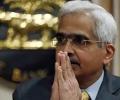
Reserve Bank Governor Shaktikanta Das on Friday stressed that the monetary policy must remain actively disinflationary to ensure that the decline in inflation from its peak of 7.44 per cent in July continues smoothly. Addressing the Kautilya Economic Conclave 2023, he also said price stability and financial stability complement each other and it has been an endeavour at RBI to manage both efficiently. Retail inflation declined to a three-month low of 5.02 per cent annually in September on account of moderation in vegetables and fuel prices, and was back within the Reserve Bank's comfort level.

Do you agree? Do you believe smaller cities are the hardest hit as far as inflation is concerned? Or do you feel this is one of those baseless economic exercises which will hold no water?
South India relatively insulated from the increase in prices.
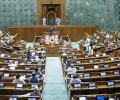
The deportation of Indians from the United States, deaths in the Maha Kumbh stampede and the joint Parliamentary committee report on the Waqf bill were among the issues that led to heated exchanges and some disruptions in an otherwise smooth first part of the Budget session that ended on Thursday.

Wholesale price inflation stood at 4.78 per cent in November. The consumer price index for agricultural labourer and rural labourers were 13.73 per cent and 13.51 per cent in October.

Retail inflation cut short its three-month declining trend and inched up to 7 per cent in August mainly due to higher food prices, according to official data released on Monday. The consumer price index (CPI) based inflation was 6.71 per cent in July and 5.3 per cent in August 2021. The CPI inflation has remained above the RBI's comfort level of 6 per cent for the eighth month in a row.

Retail inflation declined to a three-month low of 5.1 per cent in January, mainly due to subdued prices of vegetables, fruits and other food items, according to government data released on Monday. The fall indicates that retail inflation is inching towards the Reserve Bank's comfort level of 4 per cent. The Consumer Price Index (CPI) based inflation was on the rise for two straight months after touching a trough of 4.9 per cent in October 2023. In December, it stood at 5.69 per cent.

However, the hike in salary for government officials may take some time as the Centre had earlier this year decided to put a freeze on any hike in the DA of its employees till July, 2021, owing to the Covid-19 pandemic.

The Reserve Bank on Wednesday projected retail inflation to ease to 5.3 per cent in next fiscal from 6.5 per cent this year on assumptions of lower imported inflation, even though core inflation remains sticky. The RBI's inflation outlook for current fiscal has improved from 6.8 per cent projected earlier, to 6.5 per cent, on the back of steeper than expected decline in vegetable prices and Indian basket of crude at $95 a barrel. "Looking ahead, while inflation is expected to moderate in 2023-24, it is likely to rule above the 4 per cent target.

Inflation in food articles during June stood at 2.04 per cent, as against 1.13 per cent in May.

Market reaction to the Union Budget was overall neutral. The income tax "gift" wasn't enough to move the needle. There was some apparent rationalisation of Customs duty structure as well as cuts on import duties of some key components for the telecom and IT industry and duty cuts on vehicle imports. Other proposals related to development of agriculture and rural economy and renewables seem to be generally positive.

The RBI's idiosyncratic focus on wholesale price inflation at the expense of retail inflation is a serious policy error.
Costlier vegetables slowly pushed retail inflation, which had remained well within the Reserve Bank's comfortable level of 4 per cent during most part of 2019, peaked to more than three-year high of 5.54 per cent in November.
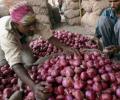
The government on Saturday imposed a 40 per cent duty on the export of onions to increase domestic availability amid signs of increasing prices. The export duty, which is the first time ever on onion, has been imposed as the retail sale price of the kitchen staple, according to government data, touched Rs 37/kg on Saturday in Delhi. The finance ministry through a Customs notification imposed a 40 per cent export duty on onions till December 31, 2023.

A collapse in global oil prices has unleashed a wave of monetary easing.

In a double delight, retail inflation eased to a one-year low of 5.72 per cent - staying below the upper tolerance limit for two months in a row, while factory output rose sharply to 7.2 per cent on the back of healthy growth in manufacturing. The retail inflation numbers based on Consumer Price Index (CPI) will provide some room for the Reserve Bank to further moderate the quantum of hike in key interest rate or even press a pause button. The RBI has been on a rate hiking spree since May 2022 in its bid to tame inflation, having raised the repo rate by a cumulative 225 basis points (bps).

Equity markets rallied after softer-than-expected inflation data in the US and UK rekindled hopes of the end of the rate-hiking cycle by major central banks. The soft inflation reading drove down bond yields and the US dollar, whetting the appetite for risky assets. The 10-year US bond yield fell below 4.5 per cent after topping 5 per cent less than a month ago.
The Reserve Bank of India's (RBI's) state of the economy report observed that any durable alignment of headline retail inflation with the target of 4 per cent could recommence in the second half of FY25 and sustain until numbers closer to the target are seen during the course of FY26, dashing hopes of any reduction in the policy repo rate in the current financial year. The report, authored by RBI staffers, including Deputy Governor in charge of monetary policy Michael Patra, said though headline numbers may fall in July and August due to base effect, it is likely to reverse in September.
Rates would stay high for longer as CPI inflation now stands at nearly 10 per cent.

CPI inflation is on the decline since July.

From the Sensex pack, ITC, Titan, Asian Paints, Reliance, Tata Steel, Bajaj Finserv, Axis Bank, Hindustan Unilever, Infosys, Bajaj Finance, Nestle and ICICI Bank were the major gainers. Kotak Mahindra Bank, Mahindra & Mahindra, HCL Technologies, State Bank of India, Bharti Airtel and Tata Motors were among the laggards.
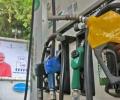
This may come as a surprise to many. Retail price inflation in petrol was the lowest at 10.21 per cent in March since November 2020. In diesel, it scraped the bottom of the barrel at 5.19 per cent in the last month of 2021-22 since February 2020. Even liquefied petroleum gas (LPG) was at a nine-month low of 9.97 per cent in the month.
Retail inflation softened to 6.71 per cent in July due to moderation in food prices but remained above the Reserve Bank's comfort level of 6 per cent for the seventh consecutive month. With retail inflation continuing to remain high despite a fall in prices of vegetables and edible oils, among other commodities in July, the Reserve Bank of India (RBI) might go for another rate hike in September. The Consumer Price Index (CPI) based retail inflation was at 7.01 per cent in June and 5.59 per cent in July 2021. It was above 7 per cent from April to June this fiscal.

Retail inflation rose to three-month high of 4.81 per cent in June, mainly on account of hardening prices of food, according to the government data. Inflation based on the Consumer Price Index (CPI) stood at 4.31 per per (revised upward from 4.25 per cent) in May and 7 per cent in June 2022. The inflation, however, remains within the RBI's comfort level of below 6 per cent.

Debt returns are always negative for investors in India, unless they are willing to take huge risk

'The RBI's MPC will maintain the current policy rates (6.50%) at the policy meeting, given ongoing inflationary pressures.'

After falling 10 per cent against the greenback in 2022, the rupee staged a comeback in 2023 as it appreciated, albeit marginally, on the back of strong portfolio inflows, in addition to timely intervention by the Reserve Bank of India. The Indian unit appreciated by 0.16 percent in six months until June 28. The rupee stood in third place in terms of appreciation against the US dollar among the 12 Asian currencies and in 12th place of the 23 emerging-market currencies.
With concern on food inflation ebbing with the monsoon progressing well, the Reserve Bank of India (RBI) is warming up to the idea of a change in stance to "neutral" from "withdrawal of accommodation", according to economists. In his speech on Thursday during the annual event of the Federation of Indian Chambers of Commerce and Industry-Indian Banks' Association, RBI Governor Shaktikanta Das said: "The balance between inflation and growth is well-poised."

Indian economy is gathering momentum in the second quarter, though inflation would continue to average above the central bank's comfort zone of 6 per cent, said an article in the RBI's monthly bulletin released on Thursday. The consumer price index (CPI) based retail inflation shot up significantly to 7.44 per cent in July, from 4.87 per cent in the preceding month, mainly due to soaring prices of tomato, vegetables and other food items. In his address to the nation on the Independence Day, Prime Minister Narendra Modi vowed to take more steps to contain price rise.

Brokerages expect a further slowdown in Indian firms' revenue and earnings growth in Q4FY25, following low single-digit growth in the preceding three quarters, as factors like weak consumer demand and credit growth linger on.

Benchmark BSE Sensex gained 130 points on Friday after gains in index majors Reliance Industries, ICICI Bank and Tata Steel ahead of the release of inflation and factory output data. Recovering from its early losses, the 30-share BSE index ended 130.18 points or 0.22 per cent higher at 59,462.78 in a range-bound trade. The broader NSE Nifty advanced 39.15 points or 0.22 per cent to close at 17,698.15.
An appropriate policy response always warrants a correct diagnosis of the problem. That is why the recent trend in inflation and its causes, and the inflation outlook take on exceptional importance ahead of the RBI's policy review on January 25.

Fitch Ratings on Thursday retained India's growth forecast for the current fiscal at 6.3 per cent citing economic resilience despite tighter monetary policy and exports weakness, but upped year-end inflation projection on El Nino threat. The Indian economy grew 7.8 per cent in the April-June quarter of current fiscal on strong services sector activity and robust demand. "The Indian economy continues to show resilience despite tighter monetary policy and weakness in exports, with growth outpacing other countries in the region," Fitch said, while projecting 6.3 per cent growth for current fiscal (April-March), and 6.5 per cent for next fiscal.
Wholesale inflation fell to a 3-month low of 2.04 per cent in July on decline in prices of food items especially vegetables, government data released on Wednesday showed. The decline in wholesale price index (WPI) based inflation in July came after it rose for four months in a row till June, when it was 3.36 per cent. It was (-) 1.23 per cent in July last year. In April wholesale inflation stood at 1.19 per cent.
 © 2026 Rediff.com - Advertise with us - Disclaimer - Privacy Policy - Sitemap - Feedback - About us - Terms of use - Grievances